

There’s nothing quite like making breakfast with silicone camping cookware while camped beside a sandstone cliff in Utah, or preparing a quick dinner tucked into a trailhead pullout on the rainy Oregon coast. As someone who’s tested my fair share of camp kitchen kits from the Colorado Rockies to California’s redwoods, I’ve come to appreciate how silicone cookware has quietly changed van life cooking—especially if you crave compactness, crave less rattling, and need gear that actually fits in a cubby.
Key Takeaways
- Silicone camping cookware is ultra-compact, flexible, and ideal for tight van and backpacking setups—storage issues become a non-issue.
- Most sets are food-grade and BPA-free, but you must avoid direct flames and sharp utensils to prevent damage.
- Market growth for silicone cookware is outpacing metal, but durability for full-time van life is its biggest limitation.
Table of Contents
Introduction to Silicone Camping Cookware
What makes silicone camping cookware so unique for modern campers and van lifers? It boils down to portability and flexibility. Where traditional steel or titanium pots are rigid and noisy, the best silicone collapsible bowls camping cookware slides easily into a drawer or tote, springs back to shape in seconds, and removes the single biggest storage headache in tiny home kitchens. No more pots tumbling out every time you open a cabinet! The global market agrees—silicone cookware is projected to grow at a 5.8% CAGR through 2032, outpacing old-school metals and indicating that more campers are chasing its space-saving advantages. [source]

In the wild, whether you’re making chilaquiles at Joshua Tree or just reheating soup alongside a river, having cookware that weighs less but does more makes van cooking less about compromise and more about freedom.
Advantages of Silicone Cookware for Van Life
Why do so many van dwellers swap metal for flexible camping cookware? First, storage. In about 200 nights stealth camping, I found that rigid pots clatter during bumpy drives and hog precious space. Silicone cookware can collapse down to a third of its height, freeing up room for real food or other gear.
This flexibility is especially handy if your “kitchen” is also your living room. It eliminates rattling—no waking up at 3 am to mystery clangs when you drive over rough asphalt or gravel. Plus, silicone is soft enough to pad itself and avoid denting other gear in cramped drawers.
There’s another stealth advantage: food-grade silicone is safe to use indoors with proper ventilation, making it ideal for closed van environments where fumes from burned plastic or Teflon would otherwise be a dealbreaker. Portable, soft-edged cookware also means fewer scratches on counters or tables—something I learned the hard way in my first van build.
Statistically, compact silicone gear is proven to reduce carried volume compared to rigid metal sets—a massive win in a 120-square-foot home on wheels.
User Complaints and Real-world Experiences
I’d love to say it’s all perfect, but my time with silicone camping pans has taught me two honest lessons: they absolutely excel in flexibility, but they’re not indestructible. In online reviews and van forums, you’ll read about melting or puncture failures—especially when someone lets a silicone rim touch a naked flame or accidentally jabs the bottom with a metal fork.
Cleaning is usually a breeze, but only if you let the cookware dry fully. Damp silicone can harbor odors or, on rare occasions, get a bit funky if you forget it in a dark drawer (trust me—I learned this lesson somewhere near Moab). Also, food-grade claims aren’t always clear; food-grade silicone is safe when properly cured, but cheap knockoffs leave users doubting toxicity.
Sharp utensils are the enemy—using metal forks or knives on silicone cookware creates a high risk of punctures or tears. Plastic or bamboo are much safer bets. I’ve personally ruined a pot by getting impatient with a cheap spork.
And while the collapsible design is a game-changer for van life and backpacking, it’s not the best pick for cooking over direct fire. Many backpackers note that the benefit is in weight and packing—not in bulletproof durability. [see more]
Overlooked Sub-Topics in Silicone Cookware Guides
Most big-name outdoor gear guides skip silicone entirely, focusing instead on metal or ceramic sets. But in my experience, there are several real-world issues that get missed:
- Nesting and Collapsible Design: Many silicone sets can nest inside themselves, letting you storing multiple pieces in a single drawer. This is a feature that’s rarely highlighted but makes a dramatic difference, especially for extended van trips or backpacking adventures.
- Utensil Compatibility: Using metal forks or knives on silicone cookware creates a high risk of punctures or tears. Plastic or bamboo are much safer bets. I’ve personally ruined a pot by getting impatient with a cheap spork.
- Toxicity and Food-Grade Certification: True food-grade silicone is hypoallergenic and BPA-free, but there’s little regulation. Few manufacturers clearly list their curing processes, and concerns over chemical leaching persist. Always vet the product—and “cure” new cookware by baking it once empty, as some environmental sites recommend.
More on this is covered by LeafScore’s summary and is outright missing from most mainstream guides.
Leading Silicone Collapsible Camping Cookware Sets
Looking at the most popular silicone camping cookware on Amazon and outdoor sites, here’s what to expect:
- Weight: Often featherweight (some sets under a pound), with full sets rivaling or beating titanium setups for ultralight travel.
- Packed Size: The biggest edge—silicone pots collapse to about a third of their expanded height, ideal for van life, bike touring, or collapsible bowls.
- Temperature Rating: Safe to 428°F (220°C)—this is high, but still lower than what you’ll hit over a roaring campfire. Always avoid direct flames on pure silicone.
- Food Safety: Look for “food grade” and “BPA-free” labels, as genuine platinum-cured silicone is safest. Steer clear of any set that doesn’t advertise these qualities up front.
- Price: High-end silicone sets are now on par with titanium—and offer unbeatable packability for the investment.
Check weight and temperature specs carefully. For reference, MSR’s Fusion Ceramic (a top metal set) comes in at 1-1.4 lbs and 7.7×5 inches packed—a baseline many silicone sets now challenge or beat. [source]
Product Comparison Section
Below is a practical comparison of top features to help with your decision—and to show exactly where silicone wins, and where metal still rules for heavy users.
| Feature | Silicone Camping Cookware | Example Metal Set (MSR Fusion) |
|---|---|---|
| Weight | Ultra-light; many sets under 1 lb | 1.0-1.4 lbs |
| Packability | Collapsible; reduces size 50-70% | Rigid, 7.7 x 5 in packed |
| Temperature Limit | 428°F (220°C); not for direct flame | Higher—can handle open fire & broiling |
| Food Safety | Food grade/BPA-free if certified | Inert (titanium/ceramic) |
| Durability | Flexible but can tear/puncture | Nearly indestructible |
| Price | Comparable to premium titanium sets | Premium ~$150+ |
In my own van, I carry both: silicone for quick meals and stealthy nights when space is critical, titanium for true backcountry abuse or when I need boiling water fast.
Frequently Asked Questions (FAQ)
Can silicone cookware be used over an open flame?
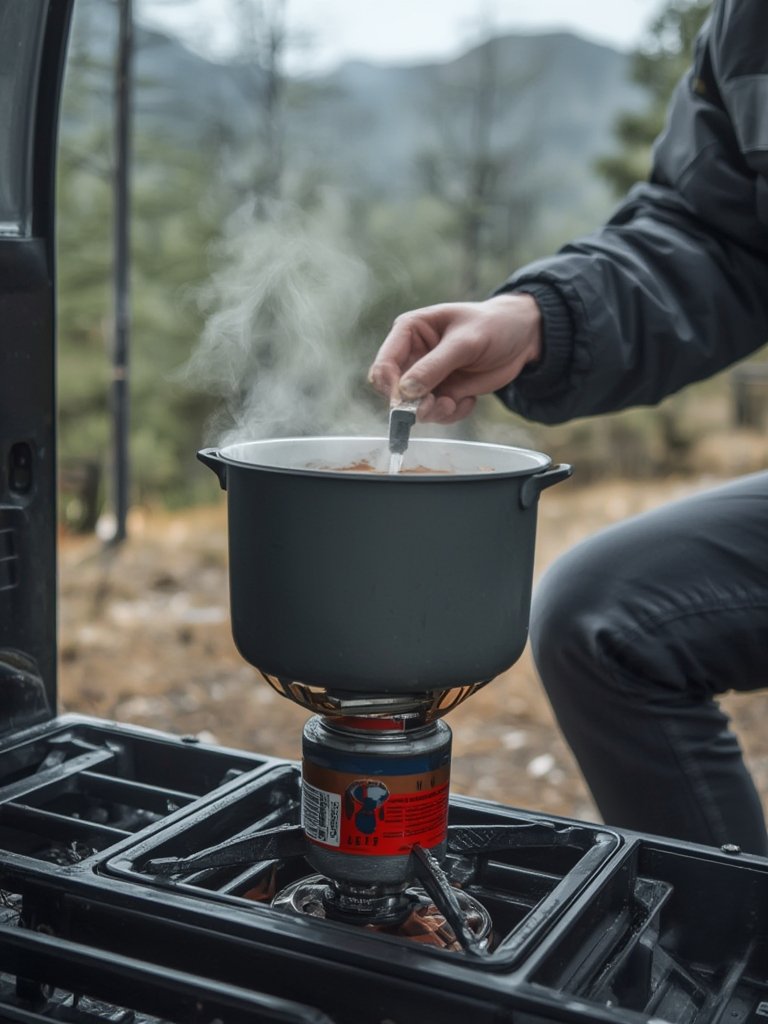
No—never put pure silicone cookware directly over a flame. Most sets are rated for 428°F (220°C); flames can melt or even catch edges on fire. Always cook on a cooking on a camp stove or with indirect heat. For open fire options, see our propane camp stove reviews.
What is the maximum temperature rating for silicone camping pans?
Most food grade silicone cookware is safe up to 428°F (220°C). Excellent for stovetop simmering, but stay well below broiling or fire temps. Always check manufacturer details before exposing any silicone pan or pot to higher heats.
How do I clean silicone camping cookware effectively?
Wipe or wash with a mild soap and sponge. Let air dry completely before collapsing—trapped moisture can breed odors. Silicone is naturally non-stick, so even sticky sauces come off with a basic scrub. For tricky residue, soak in warm water first.
Are all silicone camping cookware products food-grade?
No. Only use items clearly marked “BPA-free” and “food grade” (platinum-cured silicone is best). Cheap, uncertified sets may leach chemicals or feel sticky. When in doubt, buy from reputable brands and cure new sets before first use.
Is silicone cookware BPA-free and safe for health?
High-quality camping silicone should be BPA-free and safe for food contact. However, poor-quality knockoffs may not be. Always look for clear labeling and buy from trusted sellers. For in-depth gear safety tips, check out our camp cookware for van life guide.
Conclusion
For van lifers and overlanders, compactness is everything—and the right silicone camping cookware lets you reclaim your kitchen space, minimize cleanup, and avoid the constant rattle of metal pans. While it isn’t a universal solution (don’t expect bulletproof durability or open fire capability), it’s a game-changer for casual, urban, and space-conscious road life. If you want to purchase silicone camping cookware online for your next adventure, invest in a certified set—you’ll notice the difference on your first night. Happy camping!

Want to compare with other van kitchen gear or explore alternatives like collapsible camping pans? Check our latest guides and make your camp kitchen truly versatile.